Manufacturing qubits that can move
Researchers have demonstrated the ability to move quantum dots containing qubits without losing quantum information, potentially enabling the flexibility of atom-based systems while maintaining the manufacturing scalability of silicon-based quantum devices. This breakthrough could eliminate a critical trade-off in quantum computing by allowing chips to support dynamic qubit connectivity and adaptive error-correction strategies rather than being locked into fixed configurations at manufacturing time. For IT organizations, this means quantum systems could become more versatile, upgradeable, and economically viable at scale, opening new possibilities for practical quantum computing deployment.
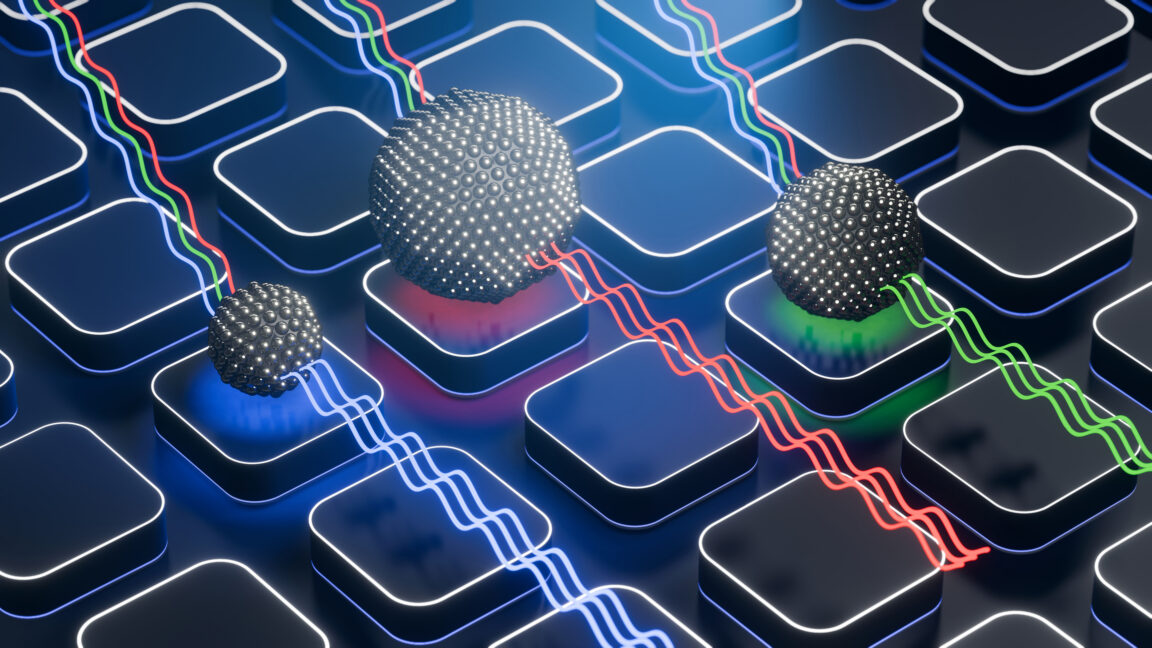
To get quantum computing to work, we will ultimately need lots of high-quality qubits, which we can tie together into groups of error-corrected logical qubits. Companies are taking distinct approaches to get there, but you can think of them as falling into two broad categories. Some companies are focused on hosting the qubits in electronics that we can manufacture, guaranteeing that we can get lots of devices. Others are using atoms or photons as qubits, which give more consistent behavior but require lots of complicated hardware to manage. One advantage of systems that use atoms or ions is that we can move them around. This allows us to entangle any qubit with any other, which provides a great deal of flexibility for error correction. Systems based on electronic devices, in contrast, are locked into whatever configuration they're wired into during manufacturing. But this week, a new paper examined research that seems to provide the best of both worlds. It works with quantum dots, which can be manufactured in bulk and host a qubit as a single electron's spin. The work showed that it's possible to move these spin qubits from one quantum dot to another without losing quantum information. The ability to move them around could potentially enable the sort of any-to-any connectivity we see with atoms and ions.Read full article Comments