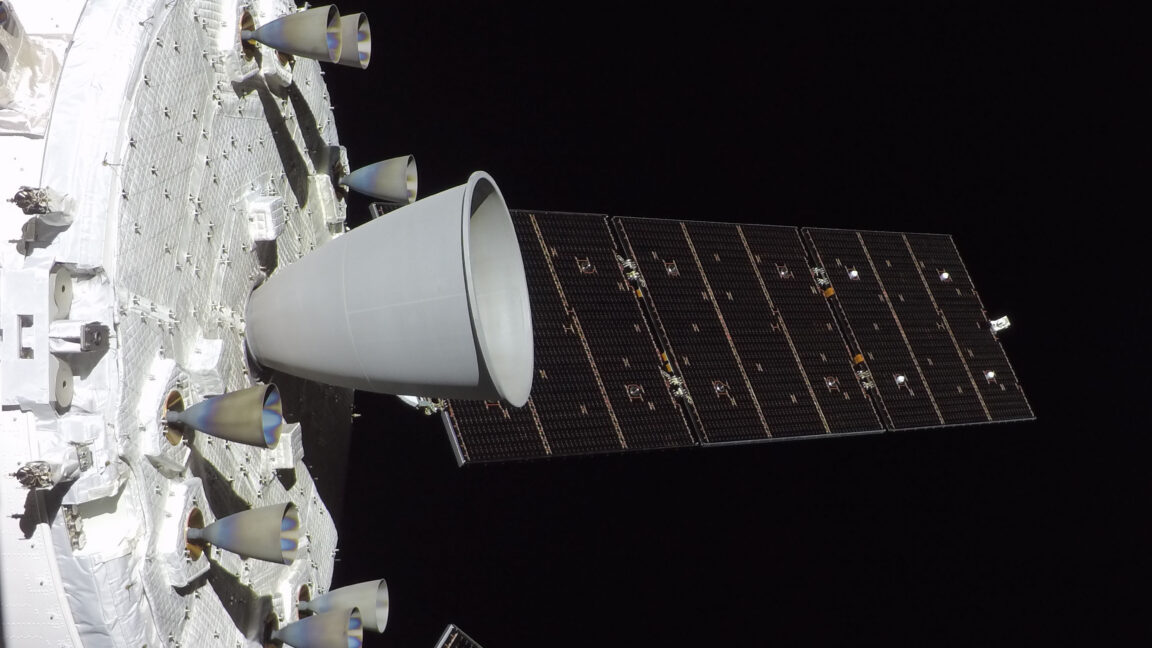
Orion helium leak no threat to Artemis II reentry, but will require redesign
NASA's Artemis II mission revealed a helium leak in the Orion spacecraft's propulsion system that is significantly higher than ground-level predictions, requiring an extensive valve redesign for future missions despite posing no risk to the current reentry. This discovery underscores the critical importance of in-flight testing and establishes that technology validation during crewed missions can inform substantial engineering changes, potentially impacting project timelines and budgets for subsequent Artemis flights. IT organizations supporting mission-critical systems should recognize this as a case study in managing unexpected technical findings in high-stakes environments where real-time data collection and rapid decision-making are essential.
Apart from pesky issues with the spacecraft's toilet and waste disposal system, most of the Artemis II mission has proceeded like clockwork. NASA has made few changes to the flight plan since the launch of the lunar flyby mission April 1. But ground controllers revamped the timeline Wednesday as the Artemis II astronauts zoomed toward Earth after a close encounter with the Moon earlier this week. The four astronauts were supposed to take manual control of their Orion spacecraft, named Integrity, for a piloting demonstration Wednesday night. Instead, mission managers canceled the demo to make time for an additional test of the ship's propulsion system. The goal was to gather data on a "small leak" of helium gas, which Orion uses to push propellant through a series of tanks and pipes to feed the spacecraft's rocket engines, said Jeff Radigan, NASA's lead flight director for the Artemis II mission.Read full article Comments