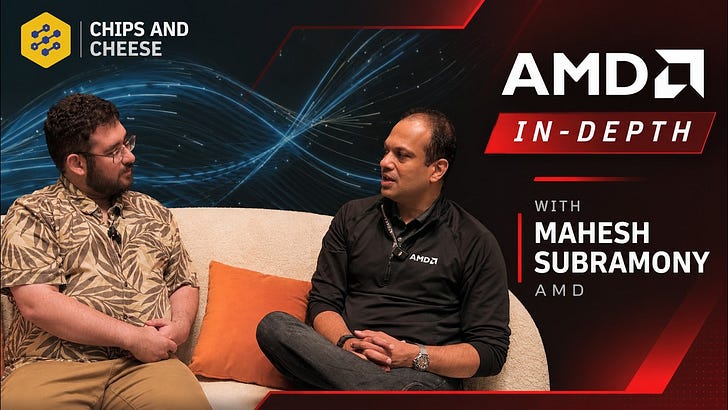
Talking Venice with Mahesh Subramony at AMD In-Depth
AMD’s Venice EPYC server design shows how advanced packaging is becoming a core business lever for data-center platforms: 2.5D packaging enables far higher interconnect bandwidth and better power efficiency, reducing the energy cost of moving data and helping support next-generation AI, analytics, and virtualization workloads. The move to split the I/O die and use different SP7/SP8 dies reflects a broader strategy of tailoring platforms to distinct workload profiles and cost envelopes, which means IT organizations should expect more specialized server SKUs rather than one-size-fits-all CPUs. For CIOs, the strategic implication is that CPU procurement, rack planning, and workload placement decisions will increasingly hinge on memory bandwidth, PCIe availability, and packaging-driven efficiency gains as much as raw core counts.