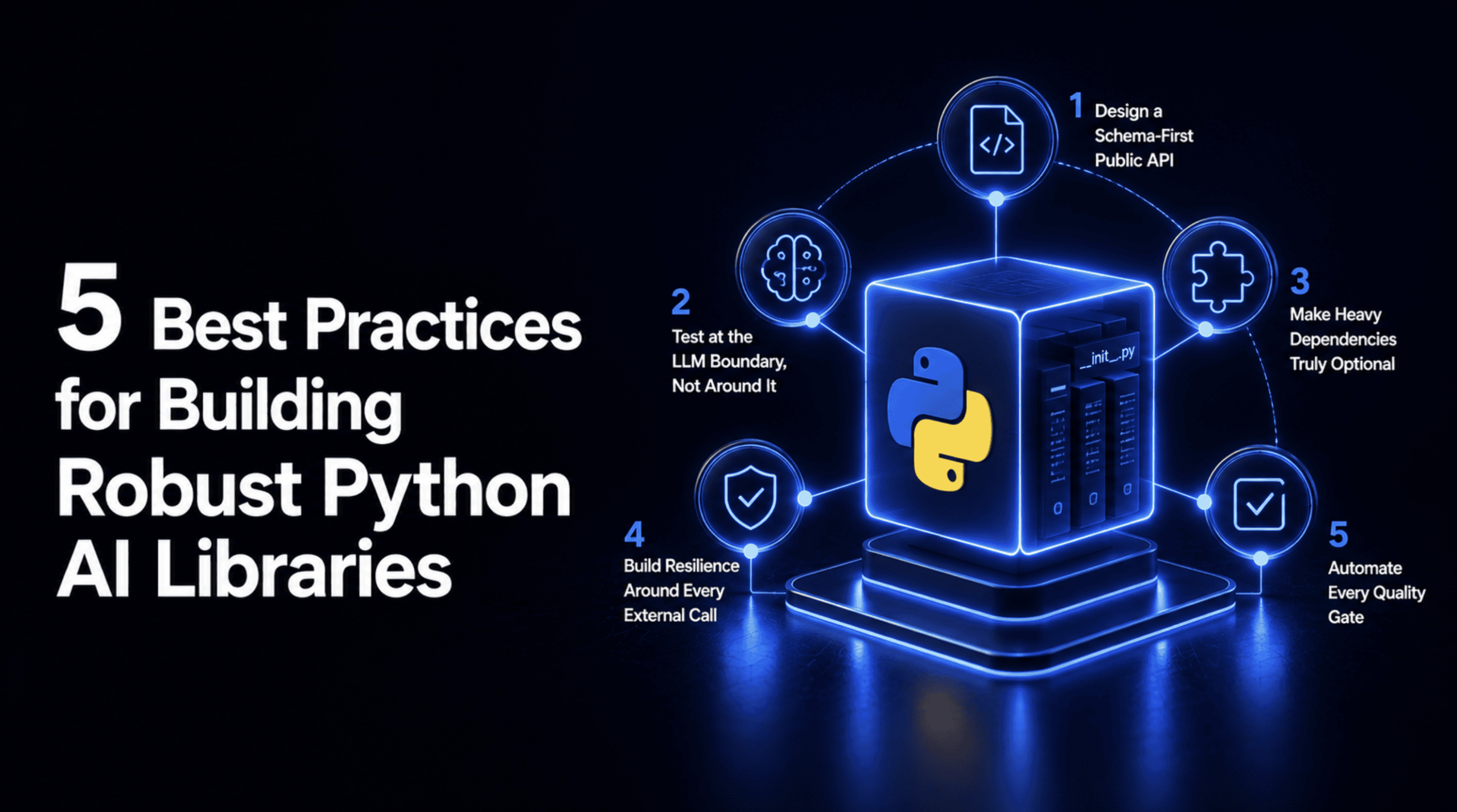
5 Best Practices for Building Robust Python AI Libraries
This article argues that AI libraries need production-grade engineering practices distinct from traditional Python packages because model outputs are unpredictable, dependencies can be heavy, and third-party APIs fail differently than standard software services. For CIOs and technology leaders, the strategic takeaway is that reusable AI tooling must be built with schema validation, dependency isolation, resilience, and automated quality gates to reduce operational risk, accelerate safe adoption, and prevent fragile demos from becoming enterprise liabilities. For IT organizations, this means treating AI SDKs and wrappers as governed platform components, not casual code, and enforcing the same rigor used for critical infrastructure and customer-facing applications.