Fast16: Cyberweapon that predates Stuxnet by five years
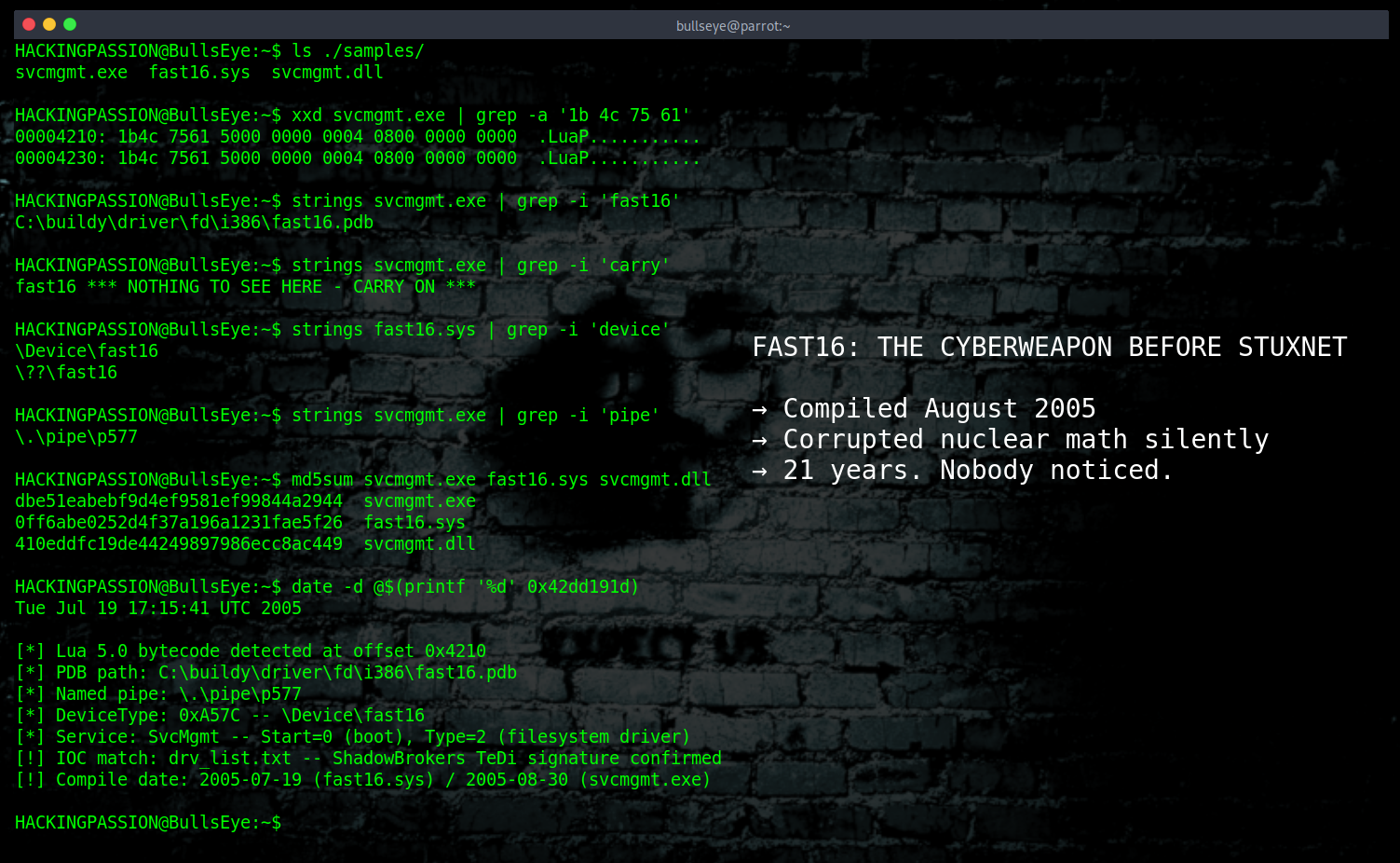
Fast16, a sophisticated cyberweapon discovered after 21 years of undetection, predates Stuxnet by five years and represents a critical blind spot in cybersecurity history—it corrupted scientific calculations in nuclear and engineering simulations while remaining invisible to security software, demonstrating that state-sponsored actors have long possessed the capability to sabotage critical infrastructure through subtle, mathematically-coherent attacks rather than obvious destruction. This discovery reveals that IT organizations may be protecting against known threat patterns while remaining vulnerable to sophisticated, precision-targeted implants designed to corrupt data integrity rather than system availability, and suggests that similar undetected variants with different payloads may still exist within critical infrastructure networks. For CIOs and technology leaders, this underscores the need to fundamentally rethink security architectures beyond antivirus detection toward data validation, calculation verification, and behavioral anomaly detection in high-consequence systems.
Fast16, a sophisticated cyberweapon discovered after 21 years of undetection, predates Stuxnet by five years and represents a critical blind spot in cybersecurity history—it corrupted scientific calculations in nuclear and engineering simulations while remaining invisible to security software, demonstrating that state-sponsored actors have long possessed the capability to sabotage critical infrastructure through subtle, mathematically-coherent attacks rather than obvious destruction. This discovery reveals that IT organizations may be protecting against known threat patterns while remaining vulnerable to sophisticated, precision-targeted implants designed to corrupt data integrity rather than system availability, and suggests that similar undetected variants with different payloads may still exist within critical infrastructure networks. For CIOs and technology leaders, this underscores the need to fundamentally rethink security architectures beyond antivirus detection toward data validation, calculation verification, and behavioral anomaly detection in high-consequence systems.