Agents Aren't Coworkers, Embed Them in Your Software
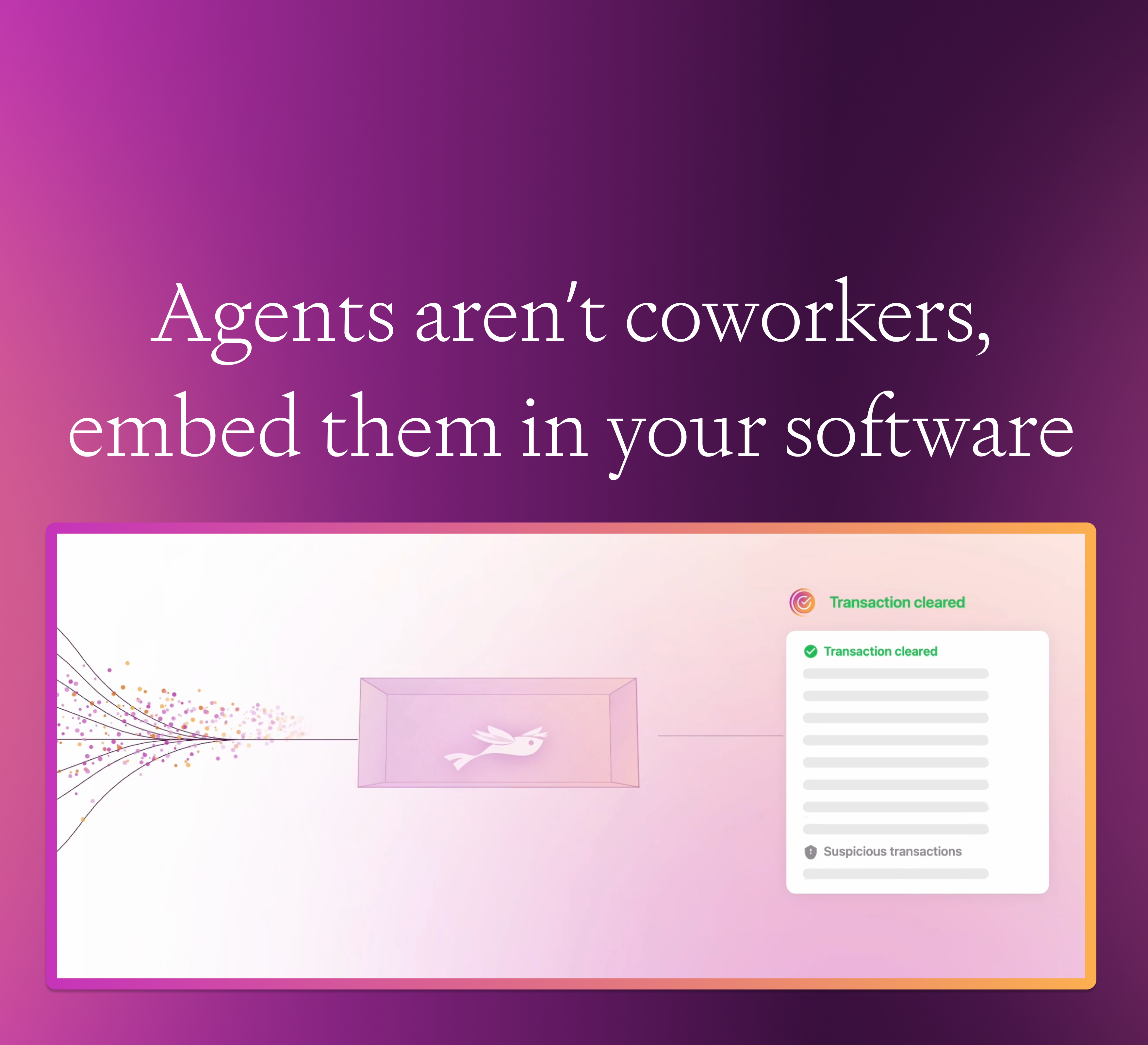
Rather than deploying AI agents as standalone conversational tools requiring constant human supervision, technology leaders should embed agents directly into existing software using established patterns like CLIs, declarative specifications, and reconciliation loops to create "calm technology" that operates autonomously in the background. When combined with change data capture (CDC) from databases, agents can react to precise, real-time data events rather than polling and guessing, dramatically reducing computational overhead and cognitive load while improving effectiveness. This architectural shift from agent-centric systems to agent-integrated software represents a fundamental change in how organizations should approach AI implementation, prioritizing ambient intelligence and efficient machine-to-machine interaction over human-like conversational interfaces.
Rather than deploying AI agents as standalone conversational tools requiring constant human supervision, technology leaders should embed agents directly into existing software using established patterns like CLIs, declarative specifications, and reconciliation loops to create "calm technology" that operates autonomously in the background. When combined with change data capture (CDC) from databases, agents can react to precise, real-time data events rather than polling and guessing, dramatically reducing computational overhead and cognitive load while improving effectiveness. This architectural shift from agent-centric systems to agent-integrated software represents a fundamental change in how organizations should approach AI implementation, prioritizing ambient intelligence and efficient machine-to-machine interaction over human-like conversational interfaces.