You want your Moon landings in HDTV? So does NASA—here's how it's happening.
NASA successfully demonstrated optical laser communications during the Artemis II mission, achieving data transmission rates of 260 Mbps—approximately 50-100 times faster than traditional radio frequencies—enabling future lunar missions to broadcast in HD or 4K. The mission included a critical proof-of-concept using commercially available, lower-cost optical ground terminals that could be deployed globally, reducing infrastructure barriers to adopting this technology for space-to-ground communications. This advancement signals a fundamental shift in space data infrastructure that will require IT organizations to prepare for exponentially larger data volumes from space missions while establishing networks of ground stations across diverse geographic regions.
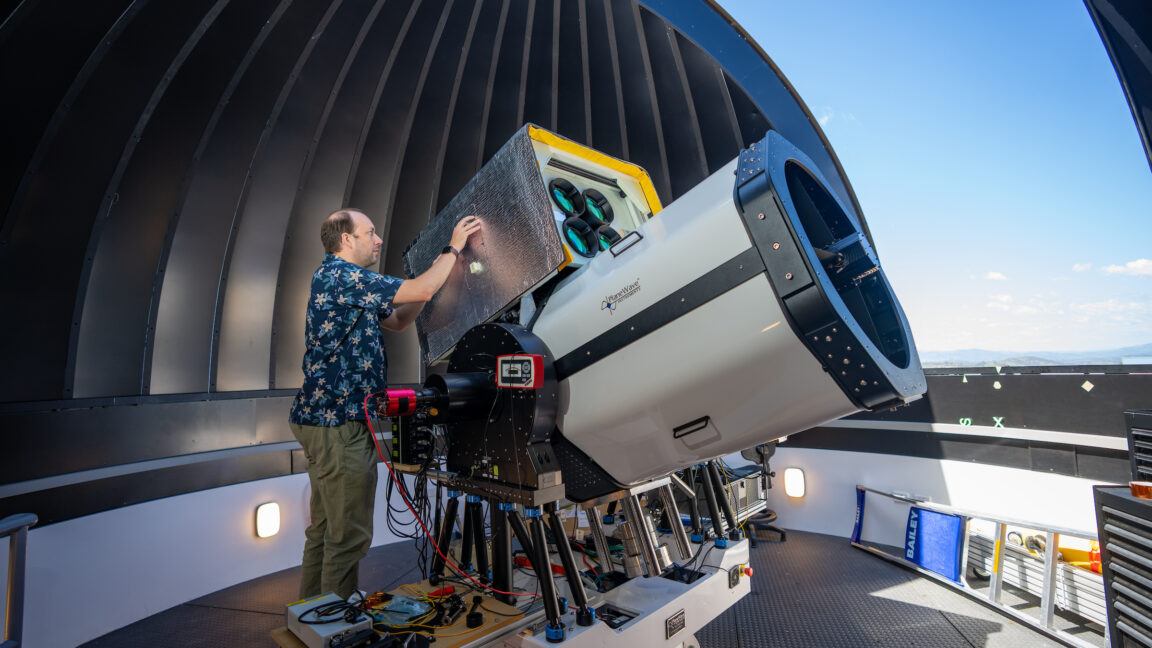
During most of the Artemis II mission, the crew of four astronauts beamed back low-definition video, both from inside the spacecraft and from exterior views of the Moon. It was exhilarating stuff, but in a world in which we're all watching HDTVs, it also felt a little flat. This is because Orion largely communicated with Earth via radio waves, picked up by large dishes sprinkled around the world. This is pretty much the same way the Apollo spacecraft talked to Earth more than half a century ago. However, unlike Apollo, the astronauts on Orion would periodically send batches of much higher-resolution data, including the stunning photographs of the far side of the Moon and the Solar eclipse observed from there. This was made possible by optical laser communications, and not just those built by NASA. The mission included a commercial component that could pave the way for vastly more data returning to Earth from space than ever before.Read full article Comments