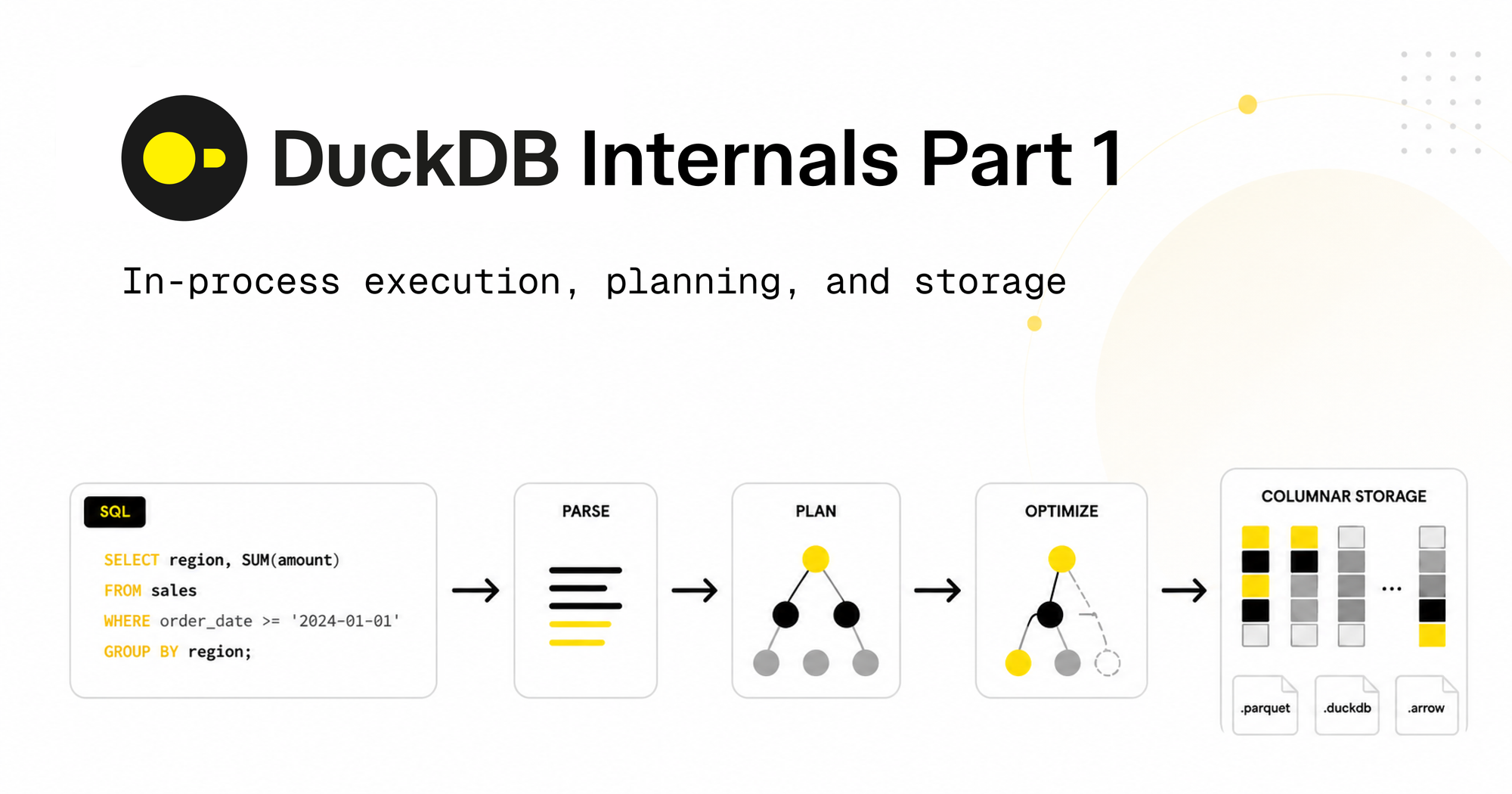
DuckDB has rapidly become a critical analytical database engine for enterprise and SaaS workloads because its in-process architecture eliminates network serialization overhead that plagues traditional server-based databases, delivering single-node performance competitive with million-dollar clusters. IT organizations should recognize DuckDB as a strategic technology that reduces infrastructure costs, simplifies deployment (no servers or clusters needed), and enables embedded analytics capabilities across applications—from notebooks to production SaaS platforms. This shift toward embedded, columnar analytical engines represents a fundamental change in how organizations can architect data workflows, requiring IT leaders to reassess database consolidation strategies and evaluate DuckDB's fit for analytics, ETL, and BI use cases currently dependent on expensive distributed systems.
DuckDB has rapidly become a critical analytical database engine for enterprise and SaaS workloads because its in-process architecture eliminates network serialization overhead that plagues traditional server-based databases, delivering single-node performance competitive with million-dollar clusters. IT organizations should recognize DuckDB as a strategic technology that reduces infrastructure costs, simplifies deployment (no servers or clusters needed), and enables embedded analytics capabilities across applications—from notebooks to production SaaS platforms. This shift toward embedded, columnar analytical engines represents a fundamental change in how organizations can architect data workflows, requiring IT leaders to reassess database consolidation strategies and evaluate DuckDB's fit for analytics, ETL, and BI use cases currently dependent on expensive distributed systems.